You read the statement, you already know what you think, and you start writing with confidence. So why does the result still disappoint? For plenty of test takers, the agree and disagree essay IELTS question is where easy-looking marks slip away. Usually it’s not about big vocabulary or perfect grammar. It’s about small habits.
This essay type is often grouped with the IELTS opinion essay, but the question To what extent do you agree or disagree? asks you to take a clear position on one statement. Below you’ll find a template to follow, tips to put into practice right away, and the mistakes to watch out for.
 Key Takeaways
- An IELTS agree or disagree essay needs a clear position stated in the introduction and kept to the end.
- Use four paragraphs, an introduction, two body paragraphs and a conclusion, and write at least 250 words.
- Answer every part of the statement, because ignoring one claim lowers your Task Response score.
- Develop two ideas fully with specific examples instead of listing several shallow points.
- Paraphrase the question, keep linking words under control and leave time to proofread.
Agree-Disagree Essay IELTS Template To Score 7+ Bands
Think of this as a skeleton, not a script. Put your own words on it every time.
Introduction (2 to 3 sentences)
- Rewrite the statement in your own words. “Some people think…” works fine.
- Say where you stand, plainly. “I largely agree” or “I disagree” is enough.
- If you have room, name your two reasons in a few words.
Body paragraph 1 (5 to 6 sentences)
- Open with your strongest reason
- Explain why it holds up
- Give a short, believable example, such as a school you know of or something that happens in big cities
- Finish by pointing back at your opinion
Body paragraph 2 (5 to 6 sentences)
- Either a second reason, or an opposing view that you then answer
- Same pattern, explain and then illustrate
- Tie it to the question again
Conclusion (2 sentences)
- Restate your position, but change the wording
- Leave it there. No fresh arguments.
Phrases worth keeping handy
Opinion: “In my view…”, “I strongly feel that…”
Adding: “On top of that…”, “Another point is…”
Examples: “Take, for instance…”, “A good illustration is…”
Ending: “All things considered…”, “To conclude…”

Experience exam-style practice and get AI-powered insights to understand where you stand.

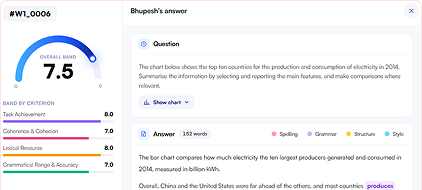
- Discover your strengths and areas to work on.
- Use detailed feedback to guide your next steps.
Tips To Score 7+ Bands in Agree-Disagree Essay Questions
Take a clear, consistent position
- Decide your stance in the first minute and make sure every idea supports it. Avoid drifting into the opposite view halfway through. If you choose “partly agree,” state exactly which part you accept and which you reject.
Address every part of the statement
- Many questions contain two or three claims (e.g., “technology makes life easier and people less social”). Respond to each one, because ignoring part of the prompt is a common reason candidates lose marks in Task Response.
Go deep, not wide
- Two well-developed ideas score higher than four shallow ones. Explain the why and how behind each point, then show its consequence. Ask yourself “so what?” after every claim to push your explanation further.
Use specific, believable examples
- Instead of “many people suffer from stress,” refer to realistic situations such as long commutes in big cities, students preparing for competitive exams, or the rise of remote work. Examples don’t need to be factually perfect, but they must be relevant and logical.
Use a flexible range of grammar with control
- Show variety through conditionals, relative clauses, passives, and concession structures, but prioritize accuracy. Most of your sentences should be error-free, so avoid forcing a complex structure you aren’t sure about.
Choose natural, precise vocabulary
- Use collocations like “place a heavy burden on” or “widen the gap between,” and paraphrase key words from the question rather than repeating them. Avoid memorized idioms and overly formal words used incorrectly, as these can lower your lexical score.
Connect ideas by meaning, not just linking words
- Coherence comes from each sentence building on the previous one. Use pronouns, referencing (“this trend,” “such measures”) and logical progression, rather than stacking “Moreover” and “Furthermore” at the start of every sentence.
Make the most of the IELTS on Computer format
- Practice typing at a steady speed so your thinking isn’t interrupted. Keep an eye on the on-screen word counter and aim for 260+ words. Because there is no spell-check, reserve the last 3 to 4 minutes to proofread for spelling, plurals, articles and subject-verb agreement.
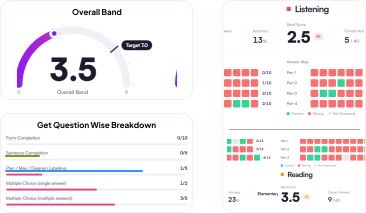
Know Your Strengths. Find Your Gaps. Prepare Smarter.
- Understand Your Performance- Identify strengths and areas that need more attention.
- Track Your Progress – Review your performance across IELTS sections.
- Focus on What Matters- Use your feedback to plan more targeted preparation.
Agree and Disagree Essay Examples
Here are five sample questions on common IELTS essay topics, each with a complete Band 7+ answer. Notice how every essay states a clear position in the introduction and keeps it to the end.
Sample Question 1
Some people believe that students should use technology, such as computers and tablets, instead of traditional books for learning. To what extent do you agree or disagree?
Answer:
Nowadays, many people believe that technology should replace traditional books in schools and colleges. I largely agree with this idea because digital devices make learning more accessible and provide students with a wider range of educational resources.
The main reason why I support the use of technology in education is that it makes learning more convenient and accessible. Students can access thousands of books, study materials, and educational videos using a single device. This also saves time because they do not need to carry several heavy books to school or college. Take, for instance, students living in remote areas who can attend online classes and access quality study materials without traveling long distances. As a result, technology creates more learning opportunities for students from different backgrounds. Therefore, I believe digital learning makes education more accessible and convenient.
Another important advantage is that technology makes lessons more interactive and interesting. Teachers can use videos, presentations, animations, and online quizzes to explain difficult topics more effectively. For example, a science teacher can use an animated video to explain how the human heart works, which may be easier for students to understand than reading about it in a textbook. Some people argue that traditional books help students concentrate better and reduce screen time. However, I believe these concerns can be managed by setting reasonable screen-time limits and using digital devices mainly for educational purposes. This makes technology a valuable tool in modern education.
To conclude, I strongly believe that technology should play a major role in education because it provides easy access to information and makes learning more engaging. Although traditional books still have some benefits, digital learning offers greater opportunities for today’s students.
Sample Question 2
Some people believe that university education should be free for all students, regardless of their financial background. To what extent do you agree or disagree?
Answer:
Many people argue that higher education should be provided free of charge to every student, irrespective of their financial situation. I strongly agree with this opinion because free university education creates equal opportunities and helps build a more educated society.
The primary reason why I support free university education is that it gives students from low-income families an equal chance to achieve their academic goals. Many talented students cannot attend prestigious universities because their families cannot afford expensive tuition fees. As a result, they often have to give up their dreams or choose courses based on their financial limitations. Take, for instance, a student from a small village who has excellent academic results but cannot afford to study engineering at a reputed university. If higher education were free, such students would have a better opportunity to develop their skills and build successful careers. Therefore, removing tuition fees can make education fairer for everyone.
Another important reason is that free higher education can benefit the entire country in the long run. When more people receive university education, the country can develop a skilled workforce in fields such as healthcare, technology, and engineering. For example, countries that invest in affordable higher education can encourage more young people to become doctors, teachers, and researchers. Some people argue that providing free education would create a financial burden on the government. However, I believe this expense should be considered a long-term investment because educated citizens can contribute to economic growth through their knowledge, skills, and employment. Hence, free university education can benefit both individuals and society.
To conclude, I firmly believe that university education should be free because it promotes equal opportunities and supports national development. Although it requires significant government funding, the long-term benefits make it a worthwhile investment.
Sample Question 3
Some people believe that children should start learning a foreign language at primary school rather than secondary school. To what extent do you agree or disagree?
Answer:
Many people believe that children should begin learning a foreign language during their primary education instead of waiting until secondary school. I strongly agree with this view because young children can learn languages more naturally and develop better communication skills from an early age.
The main reason why I support early language learning is that young children can pick up new languages more easily. At an early age, their minds are more flexible, which helps them understand unfamiliar words, sounds, and pronunciation. Learning a foreign language during primary school also gives children more time to practice and improve their speaking abilities. Take, for instance, a child who starts learning English at the age of six and regularly communicates in that language at school. By the time this child reaches secondary education, they may have developed greater confidence and fluency. Therefore, introducing foreign languages at an early age can provide significant learning advantages.
Another important benefit is that learning a foreign language helps children understand different cultures and communicate with people from other countries. In today’s interconnected world, these skills can be extremely valuable for their future education and careers. For example, students who learn languages such as French, Spanish, or German may find it easier to interact with international communities and explore educational opportunities abroad. Some people argue that primary school children already have enough subjects to study. However, I believe schools can introduce foreign languages through simple activities, games, and conversations without creating unnecessary academic pressure. This approach makes language learning enjoyable and beneficial.
To conclude, I firmly believe that foreign language education should begin in primary school because young learners can develop language skills more effectively and gain cultural awareness. Starting early can prepare children for better academic and professional opportunities in the future.
Sample Question 4
Some people believe that social media has a negative impact on people’s relationships and communication skills. To what extent do you agree or disagree?
Answer:
Nowadays, social media has become an important part of people’s daily lives, changing the way they communicate and maintain relationships. I largely agree that it has a negative impact on personal relationships because it reduces face-to-face interaction and can create misunderstandings between individuals.
The main reason why social media affects relationships negatively is that people spend less time communicating in person. Many individuals prefer chatting online or scrolling through social networking platforms instead of having meaningful conversations with family members and friends. Over time, this habit can weaken personal connections and reduce emotional bonding. Take, for instance, a family having dinner together where everyone is busy checking their mobile phones rather than talking to one another. Although they are physically present, they are not actively communicating or sharing their experiences. Therefore, excessive social media usage can reduce the quality of relationships.
Another major concern is that online communication can easily lead to misunderstandings and unnecessary conflicts. Unlike face-to-face conversations, text messages often lack facial expressions and tone of voice, making it difficult to understand someone’s actual feelings. For example, a simple message sent without an explanation may be interpreted as rude or disrespectful, even when the sender has no such intention. Some people argue that social media helps individuals stay connected with friends and relatives who live far away. While this is certainly true, I believe that relying too heavily on online communication can still weaken deeper personal connections. Thus, social media should be used carefully to maintain healthy relationships.
To conclude, I strongly believe that excessive social media use can negatively affect relationships by reducing personal interaction and increasing communication problems. Although these platforms offer convenience, people should maintain a healthy balance between online and face-to-face communication.
Sample Question 5
Some people believe that governments should spend more money on improving public transportation rather than building new roads. To what extent do you agree or disagree?
Answer:
Many people believe that governments should focus more on developing public transportation instead of constructing additional roads. I strongly agree with this opinion because better public transport can reduce traffic congestion and help protect the environment.
The primary reason why I support investing in public transportation is that it can significantly reduce traffic problems in crowded cities. When buses, trains, and metro services are affordable and reliable, more people are encouraged to use them instead of private vehicles. This reduces the number of cars on the roads and allows people to travel more efficiently. Take, for instance, a city where thousands of employees travel to work every morning using private cars. If the government introduces frequent metro services and comfortable buses, many commuters may choose public transport over driving. As a result, traffic congestion can decrease, making daily travel easier for everyone. Therefore, improving public transportation is a practical solution to urban traffic problems.
Another important benefit is that public transportation can help reduce air pollution. Private vehicles release harmful gases that contribute to environmental damage and poor air quality. In contrast, a single bus or train can carry many passengers, reducing the number of individual vehicles required on the roads. For example, cities with well-developed metro networks can encourage residents to leave their cars at home and choose cleaner transportation options. Some people argue that building new roads is necessary to support growing populations. However, I believe that expanding public transport is a more sustainable approach in the long term. Hence, governments should prioritize investment in reliable transportation systems.
To conclude, I firmly believe that governments should invest more in public transportation because it reduces traffic congestion and protects the environment. Although new roads are sometimes necessary, improving existing transport services should remain a higher priority.

Mistakes to Avoid in IELTS Agree Disagree Essays
- Flipping halfway. Agreeing in paragraph one and sounding doubtful by paragraph three confuses the reader.
- Lifting the question word for word. Copied phrases aren’t counted as your own language, so paraphrase.
- Learning an essay by heart. Examiners are trained to spot it, and a memorized answer rarely fits the actual question. The penalty can be steep.
- Falling short on length. Under 250 words costs marks. Don’t cut it close.
- Linking word overload. If every sentence starts with “Moreover” or “Furthermore,” it reads like a robot wrote it. Use them only where they help.
- New ideas in the conclusion. It’s for wrapping up. Save fresh points for the body.
- Vague support. “Many people do this” tells the examiner nothing. Name a situation.
- Careless grammar. Missing articles, wrong plurals and subject-verb slips are everywhere in Band 6 scripts.
- Drifting off topic. A polished paragraph that doesn’t answer the question scores nothing.
Practice more questions with Gurully’s online practice platform. Access full-length mock tests and a wide range of practice questions to strengthen your preparation. Make the most of section-wise tests to identify areas for improvement, enhance your skills, and track your progress. Experience real exam-like simulations, build confidence, and improve your chances of achieving your desired band score with Gurully.
FAQs
What is an agree or disagree essay in IELTS Writing Task 2?
What is the best format for an IELTS agree disagree essay?
Can I partly agree and partly disagree in an IELTS agree disagree essay?
How many body paragraphs should an IELTS agree disagree essay have?
What are common IELTS agree and disagree essay topics?
How do I state my opinion clearly in an IELTS agree disagree essay?
Also Read
Do Free IELTS Writing Practice