
Ask any IELTS candidate which reading question types they fear, and most will say True/False/Not Given or Matching Headings. List Selection almost never comes up. That’s a mistake, because this task appears in the test often enough to cost you a band if you’ve never practiced it.
It looks simple on the page. A list of options, a few of them correct, and you just tick the right ones. In practice, it trips up students who walk in unprepared, because the answers don’t follow the order of the passage and the wrong options are written to sound convincing.
This post covers what the task is, how to approach it, and where students lose marks.
 Key Takeaways
- List Selection asks you to choose a set number of correct options from a longer list, and each correct option earns one mark.
- Always check how many options the instructions ask for before you start.
- The answers do not follow the order of the passage, so locate the topic first and then match each option.
- Wrong options often reuse words from the passage but change the meaning.
- There is no negative marking in IELTS, so never leave an answer blank.
Check How Much Band You Are Going To Score In IELTS
What Is List Selection in IELTS Reading?
In List Selection, you choose a given number of options from a longer list. Here is how it works.
- You get a question or a statement, followed by a list of options, usually labeled A to F, A to G or sometimes more.
- The instructions tell you exactly how many options to pick. It could be two, three or even more, so always check.
- Every correct option you select is worth one mark. The answer boxes sit together, and the answers can come in any order.
- The wrong options are not random. They often use words from the passage but change the meaning, or mention something the writer never said.
- It’s used with texts that contain several ideas, opinions, features or facts, so you’ll see it more in dense, detailed passages.
- The skills tested are scanning for specific information, understanding detail, and spotting what the writer actually states versus what only sounds related.
One thing students forget is that, unlike many question types, the answers in this task don’t follow the passage in order. The correct options could be scattered across the whole text. This is the main reason it feels harder than it is. List Selection is closely related to IELTS Reading multiple choice questions, where you usually pick just one answer.

Experience exam-style practice and get AI-powered insights to understand where you stand.

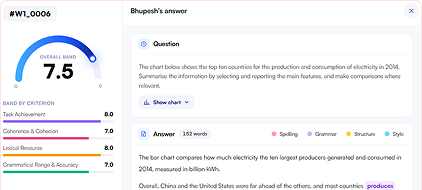
- Discover your strengths and areas to work on.
- Use detailed feedback to guide your next steps.
Tips to Score Full Marks in IELTS Reading List Selection
- Read the instructions twice. Look at how many options you need, and whether you write letters or words. A student who picks two options when three are required has already lost a mark.
- Read the question stem before the list. The stem tells you the exact topic. If it asks for “features of creative families,” you now know what to hunt for. Reading the options first just fills your head with noise.
- Locate the relevant section first. Use the topic from the question to find the parts of the passage that discuss it. The answers may come from one section or be spread across several paragraphs. Don’t read every line from the start.
- Read that section carefully, then match. Once you’ve found the area, go through it sentence by sentence. For each sentence, ask yourself whether it is relevant to the question and whether it matches one of the options.
- Don’t hunt for answers in order. If you find the third answer first, that’s fine. Mark it and move on. Forcing a sequence wastes time.
- Check the meaning, not just the words. If an option uses the same word as the passage, be suspicious. Ask whether the writer is saying the same thing, or the opposite.
- Watch for qualifying words. Words like “mainly,” “sometimes,” “all,” “never,” and “only” change everything. An option saying “all children” doesn’t match a passage that says “some children.”
- Eliminate the clearly wrong ones. If you’re stuck between options, cross out the ones with no support in the text. That raises your chances even when you’re unsure.
- Never leave a blank. There’s no negative marking in IELTS. If time is nearly up, make an educated guess from the options you haven’t eliminated.
Sample Questions With Answers
Sample Question 1
Reading Passage: The History and Development of Public Libraries
Public libraries have played an important role in providing access to knowledge and education for centuries. Initially, libraries were mainly accessible to wealthy individuals, religious institutions, and scholars. However, during the nineteenth century, public libraries became increasingly available to ordinary citizens, allowing more people to access books and educational resources.
One of the major developments in public libraries was the introduction of free lending services. Previously, many people had to purchase books or pay membership fees to access reading materials. Free lending services made books more accessible, particularly to individuals from lower-income backgrounds.
With the development of technology, libraries gradually introduced digital resources. Today, many public libraries provide access to electronic books, online journals, digital newspapers, and educational databases. These resources allow users to access information without physically visiting the library.
Public libraries have also expanded their services beyond lending books. Many now organize educational workshops, language-learning sessions, children’s reading programs, and community events. These activities encourage lifelong learning and provide opportunities for people to develop new skills.
Despite these improvements, public libraries continue to face challenges. Limited financial resources can affect the purchase of new books, the maintenance of buildings, and the introduction of modern technology. Additionally, the growing popularity of digital information has changed the way people use traditional library services.
Questions 1–4
Which FOUR of the following statements are TRUE according to the passage?
Choose FOUR letters, A–H.
- Public libraries were initially available mainly to wealthy people and scholars.
- Free lending services made reading materials more accessible to people with limited financial resources.
- Public libraries completely stopped providing printed books after introducing digital resources.
- Digital resources allow users to access information without visiting library buildings.
- Public libraries now focus exclusively on lending books to their members.
- Libraries organize activities such as language-learning sessions and educational workshops.
- The introduction of digital technology has eliminated all financial challenges faced by libraries.
- The increasing popularity of digital information has led people to stop using traditional libraries completely.
Answers:
A, B, D and F
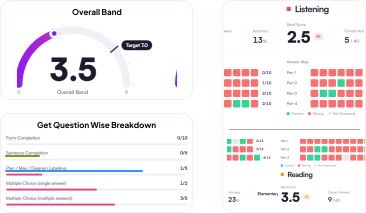
Know Your Strengths. Find Your Gaps. Prepare Smarter.
- Understand Your Performance- Identify strengths and areas that need more attention.
- Track Your Progress – Review your performance across IELTS sections.
- Focus on What Matters- Use your feedback to plan more targeted preparation.
Sample Question 2
Reading Passage: The Benefits of Learning a Foreign Language
Learning a foreign language has become increasingly important in today’s interconnected world. People learn new languages for various reasons, including education, career development, travel, and personal interest. Apart from improving communication skills, learning another language can offer several cognitive and social benefits.
One significant advantage of learning a foreign language is improved memory. Language learners regularly practice remembering new vocabulary, grammatical rules, and sentence structures. This mental activity can strengthen memory and improve the ability to process information.
Foreign language skills can also create better career opportunities. Many international companies prefer employees who can communicate with customers and business partners from different countries. Knowledge of another language may therefore give job applicants an advantage in competitive employment markets.
Another benefit is cultural understanding. Learning a language often involves exploring the traditions, history, literature, and customs of the people who speak it. This helps learners understand different perspectives and communicate more effectively with individuals from diverse backgrounds.
Technology has made language learning more accessible. Mobile applications, online courses, and virtual language exchanges allow students to practice whenever and wherever they want. However, relying entirely on digital tools may limit opportunities for real-life conversations, which are essential for developing natural speaking skills.
Despite the advantages, learning a foreign language requires patience and consistency. Students may find pronunciation, grammar, and unfamiliar vocabulary challenging. Regular practice and interaction with native speakers can help learners overcome these difficulties.
Questions 1–4
Which FOUR of the following statements are TRUE according to the passage?
Choose FOUR letters, A–H.
- Learning a foreign language can help improve memory.
- International companies never hire employees who speak only one language.
- Knowing another language may provide an advantage when applying for jobs.
- Language learning can help people understand different cultures and traditions.
- Mobile applications have completely replaced traditional language-learning methods.
- Depending only on digital tools may reduce opportunities for real-life conversations.
- Learning a foreign language does not require regular practice.
- Speaking with native speakers makes pronunciation and grammar easy to master.
Answers:
A, C, D and F
Sample Question 3
Reading Passage: The Impact of Technology on Education
Technology has significantly changed the way students learn and teachers deliver education. Traditional classroom methods are increasingly being supported by digital tools, making learning more flexible and accessible. Students can now access educational resources, attend online classes, and communicate with teachers without necessarily being present in a physical classroom.
One major advantage of technology in education is the flexibility it offers. Online learning platforms allow students to study at their own pace and revisit recorded lessons whenever necessary. This is particularly helpful for students who need additional time to understand difficult topics or who have other personal commitments.
Technology has also improved access to educational resources. Students can use digital libraries, online journals, educational videos, and interactive learning applications to explore subjects beyond their textbooks. These resources make it easier for learners to find information and develop independent learning habits.
Another important benefit is improved communication between teachers and students. Digital platforms allow teachers to share assignments, provide feedback, and answer students’ questions more efficiently. Students can also participate in online discussions and collaborate with classmates, even when they are studying from different locations.
However, technology-based education also has certain disadvantages. Students who depend heavily on digital devices may experience distractions from social media, games, and other online activities. Additionally, not all students have access to reliable internet connections or suitable electronic devices, creating differences in learning opportunities.
Although technology can support education, it cannot completely replace the role of teachers. Teachers provide personal guidance, explain complicated concepts, encourage participation, and understand individual learning difficulties. Therefore, combining traditional teaching methods with modern technology can create a more effective learning environment.
Questions 1–4
Which FOUR of the following statements are TRUE according to the passage?
Choose FOUR letters, A–H.
- Online learning platforms allow students to study according to their own schedules.
- Technology has completely removed the need for traditional classrooms.
- Digital libraries and educational videos provide students with additional learning resources.
- Technology makes communication between teachers and students more difficult.
- Students can use online platforms to revisit recorded lessons.
- Every student has equal access to reliable internet connections and electronic devices.
- Excessive use of digital devices may distract students from their studies.
- Technology can completely replace teachers in the educational process.
Answers:
A, C, E and G
Sample Question 4
Reading Passage: The Importance of Regular Physical Exercise
Regular physical exercise plays an essential role in maintaining a healthy lifestyle. People of all age groups are encouraged to participate in physical activities such as walking, cycling, swimming, running, and playing sports. Apart from improving physical fitness, exercise also contributes to better mental health and overall well-being.
One of the main benefits of regular exercise is improved cardiovascular health. Physical activities strengthen the heart, improve blood circulation, and help maintain healthy blood pressure levels. People who exercise regularly may also reduce their risk of developing certain health conditions, including heart disease and type 2 diabetes.
Exercise can also have a positive impact on mental health. Physical activity encourages the release of chemicals called endorphins, which can improve mood and reduce feelings of stress and anxiety. Some studies also suggest that regular exercise may improve sleep quality, helping individuals feel more energetic throughout the day.
Another advantage of physical activity is its ability to strengthen muscles and bones. Activities such as weightlifting, jogging, and resistance training help maintain muscle strength and bone density. This becomes particularly important as people grow older because muscle mass and bone strength naturally tend to decrease with age.
Despite these benefits, many people struggle to maintain a regular exercise routine. Busy work schedules, lack of motivation, and limited access to fitness facilities are common reasons why individuals avoid physical activity. However, exercise does not always require expensive equipment or gym memberships. Simple activities such as walking for 30 minutes a day or using stairs instead of elevators can contribute to better health.
Experts generally recommend combining different types of physical activities, including aerobic exercises and strength training. Maintaining consistency is more important than performing extremely intense workouts occasionally. Even moderate physical activity, when practiced regularly, can produce long-term health benefits.
Questions 1–4
Which FOUR of the following statements are TRUE according to the passage?
Choose FOUR letters, A–H.
- Regular exercise can improve heart health and blood circulation.
- Physical activity always increases stress and anxiety levels.
- Exercise may help improve sleep quality and overall mood.
- Weightlifting and resistance training can help maintain bone strength.
- People must purchase expensive gym equipment to remain physically active.
- Busy work schedules are the only reason people avoid physical activity.
- Occasional intense workouts are more beneficial than regular moderate exercise.
- Physical activity can help reduce the risk of certain health conditions.
Answers:
A, C, D and H
Sample Question 5
Reading Passage: The Benefits of Sustainable Tourism
Sustainable tourism has gained considerable attention as more people become aware of the environmental and social effects of traveling. It focuses on reducing the negative impact of tourism while supporting local communities and protecting natural resources. Many travelers are now choosing destinations and activities that encourage responsible tourism practices.
One major benefit of sustainable tourism is environmental protection. Tourist destinations often face problems such as pollution, excessive waste, and damage to natural habitats. Sustainable tourism encourages visitors to reduce plastic consumption, avoid littering, and respect wildlife. These practices help preserve natural environments for future generations.
Another important advantage is economic development for local communities. When tourists purchase locally made products, stay in family-owned accommodation, or eat at local restaurants, they directly support small businesses. This creates employment opportunities and helps communities generate income without depending entirely on large tourism companies.
Sustainable tourism also promotes cultural preservation. Visitors who participate in traditional festivals, explore historical sites, and learn about local customs can develop a better understanding of different cultures. The income generated through tourism can also help communities maintain historical buildings and protect cultural traditions.
However, sustainable tourism faces several challenges. Some environmentally friendly accommodation options and travel services can be more expensive than conventional alternatives. Additionally, certain tourist destinations lack proper waste management systems and public transportation facilities, making it difficult to manage tourism responsibly.
Governments and tourism organizations can play an important role in promoting sustainable travel. They can introduce environmental regulations, improve public transportation, support local businesses, and educate visitors about responsible behavior. Cooperation between travelers, businesses, and local authorities is essential for achieving long-term sustainability.
Questions 1–4
Which FOUR of the following statements are TRUE according to the passage?
Choose FOUR letters, A–H.
- Sustainable tourism encourages travelers to reduce pollution and protect natural habitats.
- Sustainable tourism focuses mainly on increasing profits for international hotel chains.
- Purchasing locally made products can support small businesses and local communities.
- Tourism income is mainly used to build new hotels instead of protecting historical buildings.
- Environmentally friendly accommodation is always cheaper than conventional accommodation.
- Poor waste management systems can create difficulties for sustainable tourism.
- Sustainable tourism discourages visitors from participating in local cultural activities.
- Cooperation between governments, businesses, and travelers is important for sustainable tourism.
Answers:
A, C, F and H

Mistakes to Avoid
- Choosing the wrong number of options. It sounds basic, but it’s one of the most common slips. Under pressure, people tick two when the task says three.
- Picking an option because a word matches. A word from the passage appearing in the option doesn’t make it correct. Examiners deliberately place familiar words in the wrong choices.
- Using outside knowledge. The official guidance is clear that what you already know has no role here. If you believe an option is true in real life but the passage doesn’t say it, it’s wrong.
- Ignoring paraphrasing. If you look only for exact words, you’ll miss correct answers. The passage might say “children raised in supportive homes” while the option says “encouraging family environment.” Train your eye to catch that.
- Assuming answers follow the passage order. In this task they don’t. Students who expect a neat order get confused and start doubting correct answers.
- Overthinking the unfamiliar. The task format may feel unusual, but the skill behind it is the same scanning and detail reading you use in other tasks. Stay calm and apply the method.
- Skipping review time. Even one minute at the end to recheck your selected options can save a mark or two.
Practice the complete IELTS Reading section and improve your skills with every individual question type on Gurully’s IELTS Practice Platform. Access full-length mock tests and section-wise practice tests designed to replicate the actual IELTS exam experience. With real-time exam simulation, you can build confidence, identify areas for improvement, enhance your reading skills, and work towards achieving your target IELTS band score.
FAQ:
What is list selection in IELTS Reading?
How is list selection different from multiple choice in IELTS Reading?
Are IELTS Reading list selection answers in the same order as the passage?
How many answers do I choose in an IELTS Reading list selection question?
How can I answer IELTS Reading list selection questions faster?
Also Read
Do Free IELTS Reading Practice