


When students begin preparing for the PTE, most of them jump straight into practice questions. But the real difference between average scorers and high scorers comes from understanding a few PTE essentials — the things that shape your mindset, your preparation style, and your performance on the actual test day.
This guide cuts through the clutter. No task breakdowns. No complex terminology. Just the PTE Core test & PTE Academic test essential things you should know and the practical reminders you must carry with you on exam day.
What PTE Essentials Actually Mean
“PTE essentials” isn’t about the structure of the exam. It’s about the core elements that influence your score:
- How the automated scoring interprets your responses.
- Which habits improve your score fastest?
- How to prepare in a focused, realistic way.
- Which behaviours silently pull down your marks?
How to maintain control inside the test room
If you understand these essentials, your preparation becomes more meaningful, and your scoring becomes more predictable.
1. Clarity and Control Matter More Than Perfection:
You don’t need native-level English. You just need to be:
- Clear
- Steady
- Accurate
- Natural

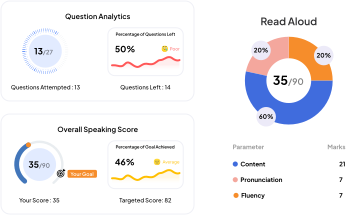
Get instant AI-powered analysis to track strengths, weaknesses & improve
- Personalized AI Insights – Understand your strengths & weaknesses instantly
- Smart Progress Tracking – Monitor improvement with in-depth analysis
- Boost Your Score Faster – Focus only where it matters most
PTE rewards consistency over complexity.
2. Using Templates is Not Enough:
Templates only support structure and do not fix weak fluency, poor pronunciation, or rushed writing. Instead you must focus on:
- Delivering the response calmly.
- Using grammar properly.
- Usage of clean vocabulary.
- Maintaining a steady flow.
These matter more than fancy phrases.
3. Do Measured Practice and avoid Guesswork:
Improvement in your scores comes from measured practice. A good preparation loop looks like this:
Practice → Get Scored → Fix Weak Areas → Repeat
Practice with Gurully, as this platform will give you accurate scoring and in-depth analysis. Through this platform, you will be able to understand:
- Where are you losing marks?
- What scoring factor is weak?
- How fluency and grammar are being evaluated.
Are your responses correct, and how much are you scoring in them
4. Daily, Expose Yourself to Real English
Daily exposure to real English helps more than you think, so spend 20–30 minutes each day listening to:
- English Podcasts.
- Interviews in English.
- English News Channels.
- Discussions and debates in English.
By doing this you will be able to improve rhythm, clarity, and comfort with natural English. These factors are also key elements in PTE scoring.

The Test-Day Guide: What You Must Remember Inside the Exam Hall
This part is where most students fail. Even well-prepared candidates lose marks because of small mistakes on test day.
Here are the essentials that actually matter when the timer starts.
1. Position Your Microphone Correctly
This is one of the biggest score-killers.
Place the mic:
- Slightly below your lower lip.
- Not touching your face.
- Not directly in front of your mouth.
This prevents breathing sounds and improves clarity.
2. Maintain a Natural Pace
Fast speaking does not equal fluency.
- A natural pace helps you:
- Avoid pauses.
- Sound confident.
- Maintain clarity.
- Stay consistent.
Think “controlled,” not “rushed.”
3. Don’t Panic When You Miss a Word
Everyone misses a word at some point. The worst thing you can do is:
- Pause too long.
- Restart.
- Overthink.
Just continue. Flow is scored, hesitation is punished.
4. Ignore the Noise Around You:
The PTE speaking section is noisy, and that’s normal. Your focus should be:
- On your screen.
- On your pace.
- On your delivery.
The system is trained to ignore background voices — you should too.
5. Use Your Notepad Smartly
Don’t try to capture everything. Write only:
- Keywords.
- Numbers.
- Connecting ideas.
- short cues.
The notepad supports you; it shouldn’t slow you down.
6. Don’t Over-edit During Writing
Overthinking kills time and clarity. Stick to:
- Simple structure.
- Clean grammar.
- Short sentences.
- Logical flow.
Good writing is clear writing.
7. Trust the Timer
PTE moves fast. Finish early, avoid last-second typing, and leave a small buffer. A calm finish beats a rushed one.

8. Reset After Every Question
If one response felt weak, it doesn’t matter. PTE does not “carry forward” your previous performance. Each question is fresh. Train yourself to:
- Breathe.
- Reset.
- Move on.
This one habit can significantly improve your overall performance.
You can also step up your PTE preparation with expert-designed mock tests on Gurully. The platform offers full-length tests with instant AI-based scoring, giving you a realistic sense of how the actual exam feels.
You can explore free, question-wise practice to work on specific skills and even take a PTE exam mock test to gauge your current readiness. If you prefer a structured routine, Gurully’s day-wise packages help you stay consistent and include predictive questions aligned with recent exam trends.
FAQ:
What do you need for PTE?
How much is 7.5 in PTE?
Is 1 month enough for PTE?
Is PTE valid for 2 or 3 years?
How to score 79+ in PTE?
Also Read:
- Collocations for PTE – Learn And Score High in All The Sections
- PTE Score Changes for Australia Visa- Updated Requirements Explained
- PTE Describe Image Template 2025 – Practice with 50 Examples
Do Free PTE Exam Practice