The Write from Dictation task in PTE tests your ability to listen, understand, and transcribe the English language. Most test-takers find recognizing words, spelling, and sentence structure challenging, which directly impacts their performance. So to score high in this task, here is a list of commonly repeated dictation words and spellings for PTE that you can also practice while taking an online PTE mock test.
In this blog, we have covered a list of 150+ dictation words for the PTE exam, the most commonly misspelled PTE spellings, and bonus tips to help you score high. Read this blog and bookmark this PTE spelling list for the future.
List of 150+ PTE Dictation Words and Spellings
| Word | Pronunciation Guide | Meaning |
| Abandon | uh-BAN-duhn | To leave something or someone behind |
| Accessible | ak-SES-uh-buhl | Easy to reach, use or understand |
| Accommodation | uh-kom-uh-DAY-shun | A place to live or stay |
| Accumulate | uh-KYOO-myuh-layt | To gather or collect gradually |
| Achievement | uh-CHEEV-muhnt | Something done successfully with effort |
| Acknowledge | ak-NOL-ij | To accept or admit that something is true |
| Acquire | uh-KWY-er | To get or gain something |
| Adequate | AD-uh-kwit | Sufficient or acceptable |
| Aesthetic | es-THET-ik | Relating to beauty or art |
| Affiliation | uh-FIL-ee-AY-shun | A connection or association with a group or organization |
| Agriculture | AG-ri-kuhl-cher | The science or practice of farming |
| Allocate | AL-uh-kayt | To give out for a particular purpose |
| Alternative | awl-TUR-nuh-tiv | Another possible choice |
| Ambiguous | am-BIG-yoo-uhs | Open to more than one interpretation; unclear |
| Analysis | uh-NAL-uh-sis | Detailed examination of elements |
| Apparent | uh-PAIR-uhnt | Clearly seen or understood |
| Appreciation | uh-PREE-shee-ay-shun | Recognition of the value of something |
| Approximately | uh-PROK-suh-mit-lee | Close to but not exactly |
| Archaeology | ar-kee-OL-uh-jee | The study of human history through remains and objects |
| Argument | AR-gyuh-muhnt | A reason given to support an idea |
| Assessment | uh-SES-muhnt | Evaluation or estimation of quality |
| Atmosphere | AT-muhs-feer | The layer of gases around the earth; also the mood of a place |
| Authority | aw-THOR-uh-tee | The power or right to make decisions |
| Beneficiary | ben-uh-FISH-ee-er-ee | A person who gains an advantage or benefit |
| Biodiversity | by-oh-dy-VUR-si-tee | The variety of plant and animal life in an area |
| Bureaucracy | byoo-ROK-ruh-see | A system of government with many rules and officials |
| Candidate | KAN-di-dayt | A person who applies for a job or takes an exam |
| Catastrophe | kuh-TAS-truh-fee | A sudden disaster or calamity |
| Category | KAT-uh-gor-ee | A group of things with shared features |
| Census | SEN-suhs | An official count of a population |
| Circumstance | SUR-kuhm-stans | A condition that affects a situation |
| Collaboration | kuh-LAB-uh-RAY-shun | Working together to achieve a goal |
| Colleague | KOL-eeg | A person you work with |
| Commitment | kuh-MIT-muhnt | A promise or strong dedication to something |
| Committee | kuh-MIT-ee | A group of people chosen to make decisions |
| Compensation | kom-puhn-SAY-shun | Payment for work or damages |
| Comprehend | kom-pri-HEND | To understand something fully |
| Conscientious | kon-shee-EN-shuhs | Careful and wanting to do things correctly |
| Conscious | KON-shuhs | Aware of and responding to surroundings |
| Consensus | kuhn-SEN-suhs | General agreement within a group |
| Consequence | KON-si-kwens | A result or effect of an action |
| Conspicuous | kuhn-SPIK-yoo-uhs | Easily seen or noticed; attracting attention |
| Contemporary | kuhn-TEM-puh-rer-ee | Belonging to the present time |
| Controversial | kon-truh-VUR-shul | Causing public disagreement or debate |
| Criterion | kry-TEER-ee-uhn | A standard for judging something |
| Curriculum | kuh-RIK-yuh-luhm | The subjects taught in a course or school |
| Deduction | dih-DUHK-shun | Subtracting something or deriving a conclusion |
| Definitely | DEF-uh-nit-lee | Without any doubt |
| Deliberation | dih-LIB-uh-RAY-shun | Careful thought or discussion |
| Democracy | dih-MOK-ruh-see | A system of government elected by the people |
| Demonstrate | DEM-uhn-strayt | To show or prove clearly |
| Dependent | dih-PEN-duhnt | Relying on someone or something |
| Derivative | dih-RIV-uh-tiv | Something that comes from another source |
| Desperate | DES-per-it | Feeling or showing a strong need |
| Deteriorate | dih-TEER-ee-uh-rayt | To become worse or decline in quality |
| Devastation | dev-uh-STAY-shun | Severe destruction or damage |
| Dilemma | dih-LEM-uh | A difficult choice between two options |
| Discipline | DIS-uh-plin | Training to follow rules; also a field of study |
| Discrepancy | dih-SKREP-uhn-see | An inconsistency or difference |
| Distinction | dih-STINK-shun | A difference between similar things |
| Diverse | dai-VURS | Showing a great deal of variety |
| Economy | ih-KON-uh-mee | The system of money, trade and industry in a country |
| Efficient | ih-FISH-uhnt | Working in a well-organized and productive way |
| Elaborate | ih-LAB-uh-rayt | Detailed and complicated |
| Elicit | ih-LIS-it | To draw out a response or answer from someone |
| Embarrass | em-BAIR-uhs | To make someone feel awkward or ashamed |
| Emphasis | EM-fuh-sis | Special importance given to something |
| Entrepreneur | on-truh-pruh-NUR | A person who starts and runs a business |
| Environment | en-VY-ruhn-muhnt | The natural world or the surroundings of something |
| Equipment | ih-KWIP-muhnt | The tools needed for a particular activity |
| Essential | ih-SEN-shuhl | Absolutely necessary |
| Evaluate | ih-VAL-yoo-ayt | To assess or judge the value or quality |
| Exaggerate | ig-ZAJ-uh-rayt | To describe something as bigger than it is |
| Exemplary | ig-ZEM-pluh-ree | Serving as a desirable model |
| Existence | ig-ZIS-tuhns | The state of being real or alive |
| Experiment | ik-SPER-uh-muhnt | A scientific test to discover something |
| Explicit | ik-SPLIS-it | Stated clearly and in detail |
| Fluctuate | FLUHK-choo-ayt | To change level or amount often |
| Foreign | FOR-in | Belonging to another country |
| Fundamental | fuhn-duh-MEN-tl | Basic and very important |
| Government | GUHV-ern-muhnt | The group of people who rule a country |
| Guarantee | gair-uhn-TEE | A firm promise that something will happen |
| Harass | huh-RAS | To trouble or annoy someone repeatedly |
| Hierarchy | HY-uh-rar-kee | A system of levels from highest to lowest |
| Hypothesis | hy-POTH-uh-sis | A proposed explanation based on limited evidence |
| Immediately | ih-MEE-dee-it-lee | At once; without delay |
| Impeccable | im-PEK-uh-buhl | Flawless or without mistakes |
| Implementation | im-pluh-men-TAY-shun | Putting a plan into effect |
| Independent | in-di-PEN-duhnt | Free from outside control |
| Indispensable | in-di-SPEN-suh-buhl | Too important to be without |
| Inevitable | in-EV-i-tuh-buhl | Certain to happen |
| Infrastructure | IN-fruh-struhk-cher | Basic systems such as roads, power and water |
| Innovation | in-uh-VAY-shun | A new idea, method, or device |
| Integrate | IN-tuh-grayt | To combine into a whole |
| Intelligence | in-TEL-i-juhns | The ability to learn and understand |
| Interpretation | in-tur-pri-TAY-shun | Explanation or understanding of something |
| Intuition | in-too-ISH-uhn | The ability to understand instinctively |
| Irrelevant | ih-REL-uh-vuhnt | Not connected to the matter at hand |
| Justification | jus-tuh-fi-KAY-shun | Showing something to be right or reasonable |
| Knowledge | NOL-ij | Information and understanding gained through learning |
| Laboratory | LAB-ruh-tor-ee | A room for scientific experiments |
| Legislation | lej-is-LAY-shun | Laws made by a government |
| Liaison | lee-AY-zon | Communication or cooperation between groups |
| License | LY-suhns | An official permit to do something |
| Literature | LIT-er-uh-cher | Written works, especially of lasting value |
| Magnitude | MAG-ni-tood | The great size, extent, or importance of something |
| Maintenance | MAYN-tuh-nuhns | The work of keeping something in good condition |
| Manipulate | muh-NIP-yuh-layt | To control or influence skillfully |
| Millennium | mih-LEN-ee-uhm | A period of one thousand years |
| Mitigate | MIT-uh-gayt | To make less severe or painful |
| Motivation | moh-tuh-VAY-shun | The reason or incentive to do something |
| Navigate | NAV-uh-gayt | To find the way, especially in complex situations |
| Necessary | NES-uh-ser-ee | Needed; required |
| Noticeable | NOH-ti-suh-buhl | Easy to see or notice |
| Occasion | uh-KAY-zhuhn | A particular time or event |
| Occurrence | uh-KUR-uhns | Something that happens |
| Opportunity | op-er-TOO-ni-tee | A chance to do something |
| Orientation | awr-ee-en-TAY-shun | The determination of position or direction |
| Parallel | PAIR-uh-lel | Side by side and the same distance apart; also similar |
| Parameter | puh-RAM-uh-ter | A boundary or limit that affects how something functions |
| Parliament | PAR-luh-muhnt | The group of elected people who make laws |
| Perseverance | pur-suh-VEER-uhns | Continued effort despite difficulty |
| Perspective | per-SPEK-tiv | A particular point of view |
| Phenomenon | fih-NOM-uh-non | A fact or event that can be observed |
| Philosophy | fih-LOS-uh-fee | The study of knowledge, reality and existence |
| Possession | puh-ZESH-uhn | Something that someone owns |
| Predecessor | PRED-uh-ses-er | A person who held a position before another |
| Predominant | pri-DOM-uh-nuhnt | Being the strongest or main element |
| Preliminary | prih-LIM-uh-ner-ee | Coming before the main part |
| Presumption | prih-ZUHMP-shun | An idea taken as true without proof |
| Privilege | PRIV-uh-lij | A special right or advantage |
| Proficient | pruh-FISH-uhnt | Skilled and competent |
| Proposition | prop-uh-ZISH-uhn | A suggested plan or statement to be considered |
| Psychology | sy-KOL-uh-jee | The scientific study of the mind and behavior |
| Quantitative | KWON-tuh-tay-tiv | Relating to measurable amounts |
| Questionnaire | kwes-chuh-NAIR | A set of written questions used for a survey |
| Receive | rih-SEEV | To get something given or sent |
| Recommendation | rek-uh-men-DAY-shun | An advice or suggestion for the best course of action |
| Reference | REF-er-uhns | A mention of a source of information |
| Relevance | REL-uh-vuhns | Importance or significance to the matter at hand |
| Relinquish | rih-LING-kwish | To give up or surrender something |
| Resolution | rez-uh-LOO-shun | The act of solving a problem or dispute |
| Rhythm | RITH-uhm | A regular repeated pattern of sound or movement |
| Schedule | SKEJ-ool | A plan of times for activities |
| Separate | SEP-uh-rayt | To divide or keep apart |
| Significant | sig-NIF-i-kuhnt | Large or important enough to be noticed |
| Simultaneous | sy-muhl-TAY-nee-uhs | Happening or existing at the same time |
| Sophisticated | suh-FIS-tuh-kay-tid | Complex and advanced in design or function |
| Statistics | stuh-TIS-tiks | The collection and study of numerical data |
| Strategy | STRAT-uh-jee | A plan to achieve a goal |
| Substantial | suhb-STAN-shuhl | Of considerable importance or size |
| Sufficient | suh-FISH-uhnt | Enough to meet the needs or requirements |
| Surpass | ser-PASS | To go beyond or exceed in quality or performance |
| Sustainable | suh-STAY-nuh-buhl | Able to continue without harming the environment |
| Technique | tek-NEEK | A particular way of doing something |
| Temperature | TEM-per-uh-cher | How hot or cold something is |
| Tentative | TEN-tuh-tiv | Uncertain or not definite |
| Thorough | THUR-oh | Complete and careful |
| Threshold | THRESH-ohld | The level at which something starts to happen |
| Unanimous | yoo-NAN-uh-muhs | In complete agreement |
| Unprecedented | uhn-PRES-i-den-tid | Never done or known before |
| Vacuum | VAK-yoom | A space with no air or matter |
| Validity | vuh-LID-uh-tee | The quality of being logically sound or well-founded |
| Vulnerable | VUHL-ner-uh-buhl | Easily hurt or harmed |
Most Commonly Misspelled PTE Spellings
| Correct Spelling | Common Mistake |
| Accommodation | Accomodation |
| Achievement | Acheivement |
| Argument | Arguement |
| Committee | Commitee |
| Conscientious | Consciencious |
| Definitely | Definately |
| Embarrass | Embarass |
| Environment | Enviroment |
| Existence | Existance |
| Foreign | Foriegn |
| Government | Goverment |
| Guarantee | Guarentee |
| Harass | Harrass |
| Independent | Independant |
| Liaison | Liason |
| Maintenance | Maintainance |
| Millennium | Millenium |
| Necessary | Neccessary |
| Occurrence | Occurence |
| Privilege | Priviledge |
| Questionnaire | Questionaire |
| Receive | Recieve |
| Rhythm | Rythm |
| Separate | Seperate |
According to Pearson’s PTE Academic Score Guide, Write from Dictation gives one point for each correct word spelled correctly, so a single misspelled word costs you that point. Pearson also accepts US, UK, Australian and Canadian spelling, but you should stick to one style throughout your test. Here are the words students most often get wrong, along with the common mistake to avoid.

Start your free PTE mock test with Gurully and get AI-powered analysis for a personalized journey.

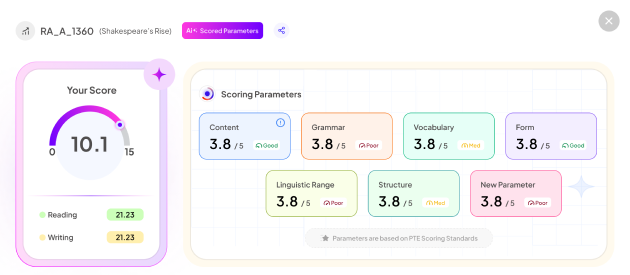
- Kickstart your PTE prep with a free AI-scored mock test
- Boost your score with in-depth analysis & smart recommendations
Common Challenges in PTE Dictation Task
Spelling Mistakes:
- Minor spelling mistakes that cut off valuable scores.
- Similar words that sound the same but are spelled differently cause confusion (e.g., “their” vs. “there”).
- Errors made during typing the words fast because of the time restriction.
- Difficulty with spelling long or complex words.
Missing Articles and Prepositions:
- Forgetting small words like “a,” “an,” “the,” “in,” or “on” makes the sentence grammatically incorrect.
- Confusion between definite and indefinite articles (“a” vs. “the”).
Read how spelling affects your PTE writing score to see how the same mistakes cost marks in other tasks.
Inaccurate Plural Forms:
- Writing incorrect plural endings like “-s” or “-es”
- Not able to identify singular and plural forms when listening to fast-paced audio.
- Overlooking irregular plural forms (e.g., “children,” “geese”).
Misinterpretation of Accents:
- Writing wrong words because of different accents.
- Missing words because of pronunciation (e.g., “water” pronounced differently in American and British English).
- Fast or unclear speech may further complicate comprehension.
Typing Speed:
- Missing parts of sentences because of slow typing.
- Typing errors caused by rushing to keep up with the audio.
- Lack of typing practice may lead to incorrect key presses or missed letters.
Poor Memory Retention:
- Not being able to remember long and complex sentences while writing.
- Missing the correct beginning of the sentence while trying to remember the end.

Proven Tips To Score High in PTE Dictation
Practice Daily with Real Exam Questions:
- It is advised to practice consistently on PTE practice mock test to build familiarity with words and common phrases.
- You can also learn words from Gurully’s vocabulary book.
- Do regular question-wise practice to increase accuracy and build confidence.
Develop Your Vocabulary:
- Try to learn new words from the context of academic, business, and conversational.
- Practice by taking spelling challenges through online games.
- Use vocabulary apps or flashcards to strengthen vocabulary.
Enhance Your Listening Skills:
- Listen to audio in different accents to get familiar with how words sound.
- Listen to English podcasts, watch news channels and documentaries on different topics to build comprehension speed.
- Practice listening to fast-paced speech to improve decoding skills.
Take Notes Smartly:
- While listening to audios, write short phrases or keywords to remember about the key topic of the sentence.
- Develop shorthand methods to capture essential information quickly.
- Use abbreviations for commonly repeated words.
Improve Typing Speed & Accuracy:
- Practice write from dictation task by typing to increase the speed.
- Use typing games or software to enhance muscle memory.
- Focus on maintaining accuracy while typing rapidly.
Focus on Spelling & Grammar:
- Regularly check the spelling mistakes you are committing while practicing and correct them. You can check the spelling on Grammarly, thesaurus, etc.
- Learn and understand all the plural forms & grammatical rules, and correct spelling.
- Always proofread your answer to avoid any errors.

Increase Concentration and Memory:
- Practice concentration exercises to maintain focus throughout the audio.
- Break down long sentences mentally into smaller parts.
- Work on memory retention techniques like chunking and visualization.
Knowing these dictation words for PTE is essential, but practicing with real exam questions is equally crucial. On Gurully, you can practice 30,000+ questions to strengthen specific areas. Our online PTE practice platform offers full-length mock tests with AI-powered instant scoring. You’ll also get access to section-wise tests to focus on individual modules and boost your score.
Conclusion
Learning dictation words for PTE is a vital step toward improving your performance in the Write from Dictation task. With the list of frequently repeated 150+ PTE dictation words, the most commonly misspelled spellings, pronunciation guides, and proven tips shared in this blog, you’re now equipped to overcome common challenges. To practice these words inside full sentences, try our most repeated Write from Dictation questions.
FAQ:
How to improve dictation in PTE?
How to get 70 in PTE speaking?
How to get 79+ in PTE writing?
Is 7.25 rounded to 7.5 in IELTS?
What is 4.5 in PTE score?
Also Read:
- List of Essential Vocabulary For PTE Exam To Score High in 2026
- Introduction In PTE – Things You Need To Know For Making A Strong Impression
- PTE Essay Topics You Must Prepare for a High Score
Free PTE Practice Test