




If you are planning to give the PTE exam, then you must know that the Speaking section is not only challenging but also carries significant weight. So, to score well in this section, you must be very familiar with all the PTE Speaking questions as it will help you practice better and achieve your score target.
So, here are PTE Speaking sample questions with answers.
| PTE Speaking Test Questions | No. Of Tasks |
| Read Aloud | 6-7 |
| Repeat Sentence | 10-12 |
| Describe Image | 5-6 (PTE Academic), 3-4 (PTE Core) |
| Re-tell Lecture (only in PTE Academic) | 2-3 |
| Answer Short Question | 5-6 |
| Respond to a Situation | 2-3 (PTE Academic), 2- 4 ( PTE Core) |
| Summarize Group Discussion | 2-3 |
Check Your PTE Speaking Scores
Sample of PTE Speaking Questions With Answers
Read Aloud:
In this task, you have to read aloud the text that appears on the screen. Read accurately and with correct pronunciation without missing any words. You will be evaluated on content, oral fluency & pronunciation. Read to know more about Read Aloud.
Read Aloud Sample Test Questions:
Text:
Across the globe, there is a widespread effort to explore methods for extracting carbon dioxide from the atmosphere or power plant emissions and transforming it into a valuable resource. Among the various ideas explored, converting carbon dioxide into a stable fuel shows significant promise.
Audio:
Text:
A team of international researchers has uncovered a fascinating phenomenon: in response to rising global temperatures, Himalayan glaciers actively work to preserve themselves by cooling the air in contact with their ice surface. However, it remains unclear how long these glaciers can continue to fight back against the effects of climate change.
Audio:
Text:
The correlation between elevated blood pressure levels and many health complications is widely acknowledged. However, recent studies have shed light on an equally concerning aspect. Researchers have discovered that these fluctuations in blood pressure can not only be detrimental to overall health but also act as a potential precursor to the development of dementia and vascular disease.
Audio:
Text:
Astronomers have conducted an impressive observation campaign using 12 telescopes on land and in space, including three facilities belonging to the European Southern Observatory (ESO). The study has revealed the peculiar behavior of a pulsar, which is a dead star that spins at an incredibly fast rate.
Audio:
Text:
The European starling is known for its impressive vocal abilities. These versatile songbirds can learn a wide range of warbles, whistles, calls, and songs throughout their lives, making them one of the most advanced avian vocal learners. A recent study published in Science has discovered that starlings also excel in problem-solving tasks.
Audio:


Repeat Sentence:
In the PTE Repeat Sentence task, you will hear a short sentence, typically lasting between 3 to 9 seconds, and must repeat it as accurately as possible. The sentence is played only once, with no option to replay it. Read to know more about Repeat Sentence.
 PTE Speaking Practice Tips
- Maintain a steady pace – speak clearly without rushing or dragging.
- Avoid pauses over 3 seconds – keep going even if you make a small mistake.
- Use natural intonation – don’t speak in a monotone; stress key words.
- Break difficult words into syllables when practicing to improve pronunciation.
- Take full-length mock tests regularly to build confidence and speaking stamina.
Repeat Sentence Sample Test Questions
Audio:
Text:
I can’t make the lecture due to my scheduled doctor’s appointment.
Audio:
Text:
Our existence is dependent on the energy we utilize daily.
Audio:
Text:
This is just one instance; there are numerous more examples.
Audio:
Text:
His looks conveyed subtle signs of a deeper, underlying interest.
Audio:
Text:
Government regulations, although strict, have yielded unexpected positive results.

Describe Image:
In this section, the test taker must describe various images, such as pie charts, bar graphs, maps, photographs, mixed-format images, system diagrams, line graphs, process diagrams, and tables. Read to learn more about Describing Images in depth.
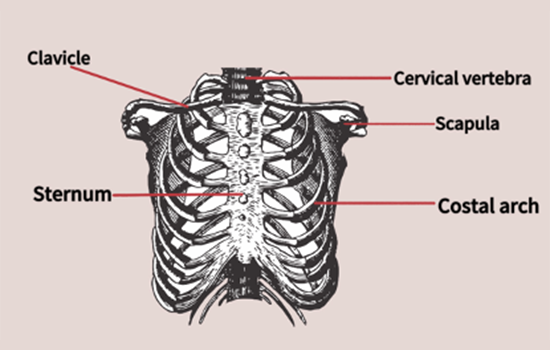
Description:
The labeled diagram illustrates the structure of the human ribcage. Key components include the clavicle, cervical vertebra, scapula, sternum, and costal arch. The sternum is centrally located, connecting the ribs, while the clavicle and scapula form the shoulder structure. The cervical vertebra supports the upper spine. Overall, the diagram provides a detailed view of ribcage anatomy.
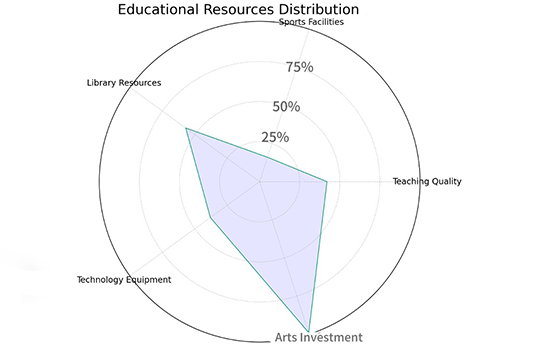
Description:
The radar chart illustrates the allocation of educational resources across various categories. Library resources and teaching quality receive moderate investment, while technology equipment and sports facilities are comparatively lower. The least investment is observed in arts. The chart suggests that educational institutions prioritize fundamental academic resources over extracurricular and creative areas.

Description:
The image displays a geographic map of Africa, highlighting the countries within the continent. Some of the prominent nations shown include South Africa, Egypt, Nigeria, Sudan, and Libya. The map provides a clear representation of Africa’s political divisions, showcasing its major countries and their relative locations.

Description:
The line graph depicts cybersecurity threat incidents from 2018 to 2023. The highest number of incidents was recorded in 2018, followed by a significant drop in 2019 to its lowest point. From 2020 onward, incidents steadily increased, peaking again in 2022. However, there was a sharp decline in 2023. The data suggests fluctuating cybersecurity threats, with periods of decline and resurgence, possibly due to evolving security measures and emerging cyber risks.
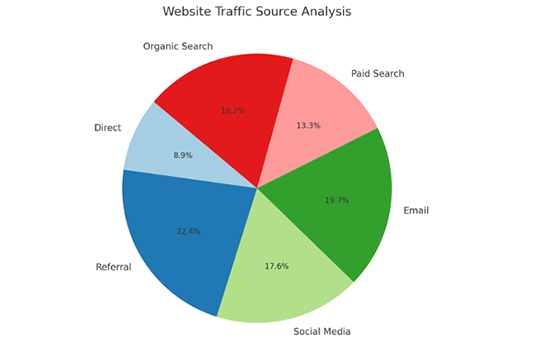
Description:
The pie chart categorizes the sources of website traffic. The largest share, at 22.4%, comes from referrals, followed closely by email at 19.7%. Organic search contributes 18.2%, while social media and paid search account for 17.6% and 13.3%, respectively. Direct traffic is the lowest, contributing 8.9% to the total website visits.

Re-tell Lecture:
In this question, you have to listen to the lecture and summarize the main points in your own words. Convey the key ideas clearly to show your understanding. You have 40 seconds to respond. Read to know in depth about Re-tell Lecture.
Re-tell Lecture Sample Test Questions:
Audio:
Answer:
There are two main theories about how gas giants formed. One is core accretion, and the other is disk instability. Scientists are still unsure which one is correct. At our lab, we’re increasing pressure in experiments to understand the extreme conditions inside gas giants better. These planets likely have metallic cores, but not necessarily made of iron. For example, hydrogen can become metallic under high pressure. Their interiors could be metallic, hydrogen-based, or even rocky. The more pressure we simulate, the closer we get to unlocking the secrets of gas giants and massive exoplanets.
Audio:
Answer:
Today, I’ll discuss how air pollution has changed since the mid-20th century and what has caused these changes. In the 1950s, pollution was evident, with thick smog in major cities, mainly from factories. This led to severe health issues, like the 1952 London smog, which caused over 4,000 deaths. In response, Britain introduced the Clean Air Act in 1956, which reduced factory pollution and eliminated smog.
However, air pollution remains a significant issue today. Unlike in the past, it’s now invisible, with vehicles being the primary source. Increased dependence on cars, trucks, trains, and planes has made transportation the most significant contributor to air pollution worldwide.
Audio:
Answer:
The interviewee reflects on the dramatic changes in the Florida Keys over the past 50 years, highlighting the depletion of marine life. They point out that around 90% of large fish, such as tuna, swordfish, and sharks, have disappeared due to overfishing and harmful fishing methods. Additionally, human activities have impacted the ocean not only by what is taken out but also by pollutants introduced directly or through atmospheric fallout. When asked to grade the ocean’s health, the interviewee struggles to assign a specific score but acknowledges that the situation is concerning, suggesting a possible grade.
Audio:
Answer:
Recent observations have confirmed multiple black hole mergers, with two key ones—one easily visible and another involving lighter black holes with more extended ringing. A third source, already published, further supports the black hole theory.
If detection sensitivity improves threefold, we could observe black holes three times more profoundly into the universe, expanding the observed volume nearly 30 times. This means detecting daily instead of monthly mergers, revolutionizing gravitational wave astronomy and marking a significant breakthrough in the field.
Audio:
Answer:
The long-standing practice of giving homework to school children has rarely been questioned, despite some educators opposing it. However, opinions are shifting as more people believe homework offers little benefit, especially for younger children.
Teachers assign homework mainly because they are required to, not because they see real value in it. Research supports this, showing that homework minimizes learning and places unnecessary burdens on parents. Senior educators are proposing a new approach—replacing homework with reading- as they believe it is a far more effective way to reinforce learning.


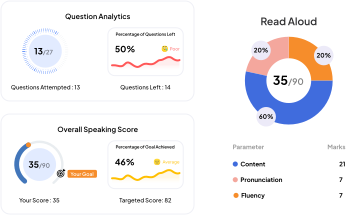
Get instant AI-powered analysis to track strengths, weaknesses & improve faster
- Personalized AI Insights – Understand your strengths & weaknesses instantly
- Smart Progress Tracking – Monitor improvement with in-depth analysis
- Boost Your Score Faster – Focus only where it matters most
Answer Short Question:
In this question type, you have to reply to a question in one or a few words. The audio plays automatically, and you might see an image. Make sure to speak clearly and finish before the progress bar runs out. Read to know more about tips and tricks to score high in Answer Short Question.
Answer Short Question Sample Test Questions
Audio:
What do we call the component of a camera that should be developed in darkness?
Answer: Negative | film
Audio:
What is the opposite of negative?
Answer: Positive
Audio:
If you want to send money overseas, what will you do?
Answer: Wire transfer.
Audio:
What is the top floor of a building?
Answer: Penthouse.
Audio:
What do we call the clothes that need washing?
Answer: Laundry

Respond to a Situation:
For this question type, you will listen to and read a prompt about an everyday situation. Then, you need to give a spoken response explaining what you would say in that scenario. Read to know more about Respond to a situation.
Respond to a Situation Sample Test Questions
Question:
Answer:
Hey everyone! I’m super excited to invite you all to a party at my place! I’ll be firing up the grill for a delicious barbecue and putting together some fresh salads. But before finalizing the menu, I want to ensure everyone’s dietary needs are covered. Do you have any food allergies, restrictions, or preferences—like vegetarian, vegan, or keto? Also, if you have a favourite dish you’d love to see, let me know! Just reply to this message, text, or call me when you can. Your input will help make this an excellent time for everyone. Can’t wait to celebrate together—see you soon!
Question:
Answer:
Hey Book Club members! I hope you’re enjoying our latest reads. I wanted to bring up an important issue—several books are missing from our club’s library. Since this is a shared resource, missing books make it harder for everyone to participate in discussions. Please take a moment to check if you have any club books and return them as soon as possible. If you need more time, just let us know! We also set up a return box and a simple borrowing log to keep things organized. Let’s work together to keep our library accessible to all. Thanks for your support, and see you at our next meeting!
Question:
Answer:
Living in a close neighbourhood is excellent, but my neighbour’s late-night music disrupted my sleep. I approached them kindly, starting with small talk before expressing my concern. I suggested lowering the volume after 10 PM as a compromise. They appreciated my approach and apologized, and we discussed solutions like using headphones. I also assured them they could ask me for quiet if needed. By handling it respectfully, we maintained a good relationship and found a solution that worked for both of us!
Question:
Answer:
I’ve been overwhelmed with work and personal commitments lately, so I spoke with my manager about adjusting my workload. I shared how the increasing demands affected my well-being and gave an example of working late nights to meet deadlines, leading to stress. I suggested solutions like redistributing tasks or implementing a more flexible schedule to improve productivity and balance. My manager appreciated my honesty, and we agreed to explore better options. This conversation helped me feel supported while ensuring I could do my best work!
Question:
Answer:
Our weekend hiking trip is almost here, but the forecast predicts heavy rain. So, we need to decide—should we go ahead, postpone, or plan something indoors? Hiking in bad weather can be risky, so postponing might be safer and more enjoyable. But if rescheduling isn’t an option, we could do something fun indoors, like a museum visit, bowling, or a movie marathon. I’d love to hear your thoughts! Let’s choose the best plan so we can still have a fantastic weekend together, rain or shine.

After knowing these sample questions, you can do more question-wise practice for free on Gurully across all exam sections. Additionally, enhance your preparation with section-wise tests and full-length mock exams that simulate actual test conditions. Our AI-powered scoring provides instant results and detailed section evaluations to help you track your progress. Stay connected by subscribing to our YouTube channel and joining our Telegram group for more updates and resources!
Summarize Group Discussion:
In the PTE Summarize Group Discussion task, you listen to a discussion involving three speakers and then produce a clear, concise summary of their key ideas using your own wording, all within a two-minute time limit.
PTE Summarize Group Discussion Sample Question & Answers
Audio 1:
Answer:
“The discussion focuses on how university students manage exam-related stress and improve their well-being during intense academic periods.
The first speaker opened the conversation by sharing their experience of feeling overwhelmed, losing sleep, and relying on caffeine while preparing for exams. They admitted their current habits may be making things worse and were curious to hear how others manage.
The second speaker strongly related to this and emphasized the value of a structured study schedule. They explained that laying out a plan helps them feel in control and prevents burnout by incorporating breaks. Later, they also mentioned using a mindfulness app, avoiding social media during study time, and maintaining a calm mental space by minimizing distractions.
In contrast, the third speaker shared that although they try planning, they often procrastinate. What helps them most is physical activity—such as running or walking—to clear their mind and reduce anxiety. They also highlighted the importance of taking time for light entertainment or social connection, like watching a show or calling a friend, to maintain emotional balance.
All three speakers agreed that coping with stress requires a mix of strategies, including time management, physical activity, mental relaxation, and emotional support. While their methods varied, they shared the belief that striking a balance between work and rest is more effective than last-minute cramming or perfectionism.”
Audio 2:
Answer:
“The discussion centers around how students cope with exam stress at university and the various methods they use to manage their mental and physical well-being.
The first speaker initiated the conversation by sharing their struggles with anxiety, lack of sleep, and overthinking due to upcoming exams. They admitted to relying on coffee and late-night study sessions, which may be worsening their condition. They were open to exploring healthier alternatives like meditation or breathing exercises.
In response, the second speaker recommended creating a structured study plan with breaks, as it reduces the feeling of being overwhelmed. They also shared their experience using a mindfulness app for just ten minutes a day, which significantly helped them stay calm. Moreover, they suggested avoiding social media during study hours to prevent distractions and anxiety from exam-related posts.
The third speaker admitted that planning alone didn’t work for them because of procrastination. Instead, they emphasized the importance of physical activity, such as a walk or run, to clear the mind and improve sleep quality. They also highlighted the need to engage in enjoyable activities like watching a show or connecting with friends to maintain a balanced routine.
All three speakers agreed that a combination of planning, physical movement, mindfulness, and intentional downtime helps reduce exam stress. They concluded that while everyone’s coping style may differ, maintaining balance and seeking support when needed is crucial for both academic performance and emotional health.”
Audio 3:
Answer:
“The three students discussed strategies for choosing and managing extracurricular club participation at the university.
Sarah expressed uncertainty about club selection, torn between pursuing enjoyable activities like drama or photography versus choosing clubs that would enhance her CV. She also worried about overcommitting due to her existing academic workload and part-time work responsibilities.
The second speaker advocated for following personal interests, sharing positive experiences with the hiking club as a way to relax and meet people. They argued that employers value well-rounded individuals and suggested treating club activities as essential “”me time”” that helps maintain motivation for coursework.
The third speaker supported a balanced approach, explaining their strategic choice of debate society, which combines enjoyment with skill development in public speaking and critical thinking. They emphasized practical time management by dedicating one evening weekly to club activities and highlighted valuable networking opportunities that clubs provide.
All speakers agreed on starting with one club per semester to avoid burnout, with Sarah ultimately deciding to try the photography club as a creative outlet. They concluded that students can always add more career-focused activities in future semesters once they establish a manageable routine.”
Audio 4:
Answer:
The discussion focuses on overcoming the common challenges students face during group presentations and ensuring smoother collaboration and delivery.
The first speaker expressed anxiety based on a previous experience where disagreements over task division led to inefficiency and stress. They wanted strategies to avoid conflict and confusion in future presentations. Later, they emphasized the importance of weekly check-ins and suggested making slides more visual and engaging instead of text-heavy.
The second speaker responded by highlighting the importance of setting clear expectations early on, such as assigning roles, setting deadlines, and creating a shared document for tracking tasks. They also stressed the value of rehearsing multiple times to ensure smooth transitions and staying within time limits. Additionally, they recommended slide consistency, proposing that one person should review all slides for a professional and uniform design.
The third speaker agreed but pointed out that problems can still arise even with a structured plan, such as members disappearing or not contributing. They suggested having a backup plan that includes speaking with the unresponsive member and involving the professor if needed. They also recommended allocating speaking parts based on individual strengths and rehearsing with a timer to balance timing across sections.
All three students agreed that with early planning, clear communication, regular meetings, and thoughtful design and rehearsal strategies, group presentations can become far less stressful and more effective than past experiences.
Audio 5:
Answer:
The three students discussed practical strategies for managing time effectively at university while balancing academic workload with other commitments.
The first speaker expressed frustration with constantly feeling behind despite early starts, struggling to juggle lectures, assignments, and part-time work. They showed interest in digital tools like Trello or Notion and ultimately decided to try combining small daily goals with calendar deadlines after hearing their peers’ suggestions.
The second speaker recommended using detailed planners to block out daily chunks for different activities, including scheduled breaks to reduce stress. They emphasized digital organization through Google Calendar with color-coding for different types of commitments, allowing cross-device synchronization and automatic reminders to maintain accountability.
The third speaker preferred breaking large assignments into manageable daily steps, such as writing 200 words or reading one chapter, to avoid feeling overwhelmed. They favored traditional paper lists for the satisfaction of physically crossing off completed tasks, while stressing the importance of scheduling downtime to prevent burnout and maintain focus.
All speakers agreed that consistency matters more than perfection, encouraging flexibility when plans don’t work out and emphasizing that effective time management includes making space for rest and recharging alongside productivity.
Conclusion:
Scoring high in PTE Speaking Questions requires strategic practice with frequently repeated questions. You can enhance your fluency, pronunciation, and overall performance by familiarizing yourself with everyday tasks like Read Aloud, Repeat Sentence, Describe Image, and more.
Regular practice using AI-powered tools, section-wise tests, and full-length PTE Mock Test on Gurully’s practice platform will help you build confidence and improve your scores. Stay consistent, track your progress, and leverage resources like our YouTube channel and Telegram group for additional support. Keep practicing, and success in the PTE Speaking Test Questions will be within your reach!
FAQ:
How much is 8.5 in PTE?
How to score 79 in PTE speaking?
How to practice PTE speaking?
Is 70 a good PTE score?
Can I go to Australia with a 45 PTE score?
Useful Pages for PTE Test Takers
- PTE Academic Overview
- PTE Academic Exam Pattern
- PTE Academic Fees & Registration
- PTE Academic Eligibility
- PTE Academic Result & Score
- PTE Academic Score Calculator
Also Read: