




Respond to a Situation looks like the easiest speaking task: read a situation, say what you would say. Then the timer starts and most candidates either freeze or ramble. The task now appears in both PTE Academic (since 7 August 2025) and PTE Core, and it is scored the same way in each. Here is the template, the scoring and 12 timed sample answers.
What Is PTE Respond To A Situation Question Type:
Imagine yourself in a real-life situation. The “Respond to a Situation” exercise replicates that experience, presenting you with a brief text prompt outlining a common scenario. Your job? Respond verbally as you would naturally in that situation. Sounds simple, right? The time pressure and need for clear, concise communication make it a unique challenge for PTE core respond to a situation.
Practice with predicted PTE questions
Respond to a Situation PTE Template
- Greeting
- Acknowledge the Situation
- State Your Position or Response
- Provide Reasoning
- Additional Details
- Summarize or Reiterate
- Closing Statement

Start your free PTE mock test with Gurully and get AI-powered analysis for a personalized journey.

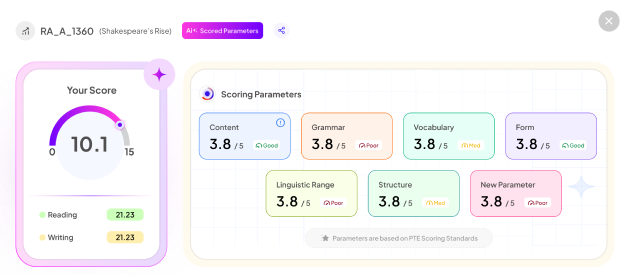
- Kickstart your PTE prep with a free AI-scored mock test
- Boost your score with in-depth analysis & smart recommendations
Key Points to Remember:
- Time Constraints: You’ll get 20 seconds to analyze and respond. After that, you have 40 seconds to speak. Make every second count!
- One Shot: You only get one chance to record your response. So, think before you speak, but don’t take too long.
- Start Strong: After the prompt, you have 3 seconds to speak. Seize the moment and launch into your response confidently.
- Keep It Concise: Give a clear and relevant response without unnecessary details. Focus on addressing the situation naturally, maintaining fluency, and communicating your ideas effectively.
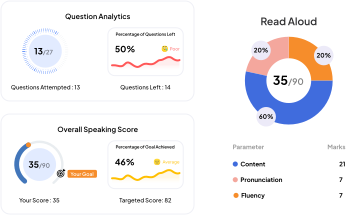
Get instant AI-powered analysis to track strengths, weaknesses & improve
- Personalized AI Insights – Understand your strengths & weaknesses instantly
- Smart Progress Tracking – Monitor improvement with in-depth analysis
- Boost Your Score Faster – Focus only where it matters most
By following this PTE respond to a situation template, you will be able to score high in all the skill traits.
Strategies To Crack Respond To A Situation Question Type:
Pay Attention To Sentence Formation:
The PTE Core uses automated scoring to evaluate your spoken English. So, try to frame the sentence properly while speaking. Here are some tips that you can apply.
- The situation might require using past, present, or future tenses to describe events. Be prepared to adjust your sentence structure accordingly.
- Ensure your verbs agree in number (singular or plural) with the sentence’s subject.
- Simple words like “and,” “but,” “because,” or “however” can help you connect ideas and build logical sentences.
- Use a mix of short and longer sentences to add variety to your speech.
- Master basic sentence structures like subject-verb agreement, proper verb tense usage, and correct word order.
Practice Fluency:
Fluency refers to the smooth and effortless delivery of your spoken or written language. It’s about expressing yourself clearly and confidently without stumbling or hesitating. Here’s how to practice fluency:
- Read Aloud Regularly: Reading different types of material (books, articles, news) helps train your brain to process and vocalize language naturally.
- Speak with Others: Converse with friends, family, or language partners. The more you speak, the more comfortable and fluent you become.
- Shadowing: Listen to native speakers and try to repeat what they say, mimicking their pace, intonation, and phrasing.
- Focus on Everyday Language: Instead of complex vocabulary, prioritize words and phrases commonly used in conversation.
Enhance Vocabulary:
The more words you have, the more precise and nuanced your response can be. Focus on vocabulary relevant to everyday situations and expressing common emotions and requests. Here are some examples
Enhancing Social Interactions:
- Greetings: Beyond “hello,” explore options like “good morning/afternoon/evening,” “how are you doing today?” or “it’s nice to see you.”
- Requests: Use phrases like “I was wondering if you could…” or “I’d be grateful if you could…”
- Apologies: Express regret with “I’m so sorry” or “That was my mistake.”
- Offering Help: Be proactive with “Let me know if you need anything” or “I’d be happy to assist you.”
Tackling Consumer Issues:
- Faulty Products: Describe problems with words like “malfunctioning,” “defective,” or “not working properly.”
- Complaints: Express dissatisfaction with “I’m disappointed with…” or “I’m not satisfied with…”
- Returns/Exchanges: Use phrases like “I’d like to return…” or “I need to exchange this for…”
Navigating Workplace Dilemmas:
- Addressing Behavior: If a colleague acts poorly, use terms like “disruptive,” “inappropriate,” or “unprofessional.”
- Requesting Extensions: Ask for more time with phrases like “I was hoping to get an extension on…” or “Would it be possible to move the deadline for…?”
- Seeking Clarification: When unsure, say, “I’m not sure I understand…” or “Could you please elaborate on…?”
Time Management:
Time is very important, so follow these tips to manage it effectively in PTE Core exam.
- Aim to understand the meaning of the conversation within the first half of the audio, leaving you time to process details and answer questions.
- Not every detail in the audio is equally important. Train yourself to identify keywords and phrases that directly relate to the potential questions.
- If you miss a detail or get confused, don’t dwell on it. Move on to the next piece of information, as the answer might lie further in the audio.
- Even if you’re unsure, take a guess. There’s no penalty for incorrect answers in the PTE. You can also practice this question by attempting PTE practice test.
Active Listening:
Mastering this skill will allow you to extract the core and relevant information. Here are tips for doing that.
- Listen for clues (tone, word choice) to understand the speaker’s purpose.
- As you listen, try to predict what information the questions might ask about. This will help you focus on relevant details and prepare mentally.
- Train yourself to recognize words and phrases that signal important information. These might include nouns related to people, places, things, and actions.
- Excessive note-taking can distract you from the audio. Instead, develop a shorthand system for jotting down critical details like names, dates, or locations.
- As the audio progresses, summarize the situation mentally in simple terms.
Want to know what exam will suffice your needs, check PTE Core Vs PTE Academic
PTE Respond to A Situation Sample Question & Answer
Question 1:
Answer:
Hi, everyone! I’m happy to take on writing the conclusion for our report because I know how important it is to tie all our work together. To do this effectively, I’ll need each of you to send me your findings and any key data you’ve collected so far. If you could send them over by Thursday evening, I’ll have enough time to review everything and draft a strong conclusion that reflects everyone’s contributions. This way, we can make sure our report feels cohesive and professionally written before we submit it. Does that timeline work for everyone?
Question 2:
Answer:
Hi, team! I’m glad to design the poster for the academic conference, but I’ll need all the finalized content, references, and any images or visuals you want included before I can get started. Could you share everything with me by Wednesday so I have enough time to plan the layout and make it look clear and engaging? This will also allow me to create a draft version that we can review together and make any necessary changes. I really want us to present something we can all be proud of. Would that deadline be okay for everyone?
Question 3:
Answer:
Hello everyone! I’d be glad to work on preparing the opening statement for our debate, and I want to make sure it supports all our main arguments effectively. To do that, I’ll need you all to finalize and send me the key points we’ve agreed on as soon as possible. Could we aim to have them collected by tomorrow evening? This would give me plenty of time to draft an engaging introduction, practice it a few times, and make sure it flows well with the rest of our debate structure. Does that sound reasonable to everyone?
Question 4:
Answer:
Hi, team! Since my role is to compile and edit the final draft of our assignment, I really need everyone’s sections to get started soon. Could you please send me your parts by Friday afternoon at the latest? This way, I’ll have enough time to edit and make sure the report flows smoothly, check for consistency in formatting, and polish the language so it feels cohesive. I want to make sure our final submission looks professional and represents our group effort well. Can we all agree on that deadline?
Question 5:
Answer:
Hello, everyone! I’m happy to create the handouts for our seminar presentation, but I’ll need a detailed outline of all the topics we’re planning to cover. If you could share that with me by Wednesday, I’d have enough time to organize the information, design clear and helpful handouts, and make sure they’re ready for printing. I want these materials to really support our audience’s understanding and leave a good impression of our presentation. Does that timeline work for everyone?
Question 6:
Answer:
Hello Professor Henderson, I hope you’re doing well. I’m preparing to contribute to the discussion forum by Friday, but I’m a little unsure about the specific topic we’re expected to address. Could you please clarify if we’re meant to focus on [option A] or [option B]? Knowing this would really help me structure my response properly and make sure it meets the assignment requirements. I’d appreciate your guidance on this so I can post my contribution in time. Thank you for your help!
Question 7:
Answer:
Hey John, thank you so much for inviting me to join the study group! I’d really like to be part of it, but my schedule is a little busy this week. Could you let me know the planned meeting times and how long each session will run? That way, I can see if I can fit it in and make sure I can contribute properly. If possible, I’ll do my best to attend and support the group’s preparation for the exam.
Question 8:
Answer:
Hi Professor Eisenberg, I hope you’re doing well. I’ve been thinking about possible topics for my research paper, and I have a few ideas in mind. However, I’m not entirely sure which one fits best with the assignment criteria and your expectations. Could I share my ideas with you and get your feedback? It would really help me choose a topic that aligns well with the course objectives. Thank you so much for your time and guidance!
Question 9:
Answer:
Hey, sorry to interrupt for a moment. I have a question about complex theory that I think is related to what we’re discussing, but I’m not entirely sure if this is the right time to ask. Would it be okay if I brought it up now, or would you prefer I save it for the end of the lecture? I believe asking it now could help me and maybe even others in the class understand today’s topic more clearly. I really don’t want to disrupt the flow of your lecture, but I’d appreciate your guidance on when it would be best to discuss this.
Question 10:
Answer:
Hi, everyone! I wanted to talk about our lab experiment because we’re coming up on some important deadlines. I’ve noticed a few people haven’t been able to attend the preparation meetings, and I completely understand that schedules can get busy. But to make sure we finish the experiment successfully and on time, I really need everyone’s input and cooperation moving forward. Could we try to attend the next meeting as a full group so we can divide the tasks fairly and address any challenges together? It’ll make the process smoother for all of us, and I’m confident we can achieve a great result if we all pitch in.
Question 11:
Answer:
Hi, everyone! I’m happy to help with creating the PowerPoint slides for our academic writing class presentation. To make sure I can design and structure them well, I’ll need each of you to send me your research findings and all the content details before this weekend. Having all the materials early will give me enough time to organize the slides clearly and make them visually appealing. Could we agree on Friday as the deadline for sharing your parts? That way, I can get started right away.
Question 12:
Answer:
Hi, team! I’m ready to take on the responsibility of compiling and editing our research paper to ensure it reads smoothly and looks consistent. To do this effectively, I’ll need everyone to send me their respective sections by Wednesday. This will give me enough time to review all parts, make necessary edits, and check for formatting issues. Can we all agree to stick to this deadline so we can submit a strong, polished final draft on time?
Practice with more Respond to a Situation
Knowing the strategies is not enough; you must practice them thoroughly. Gurully provides you with PTE full-length mock test on which you can practice for PTE Core. We also have separate practice tests section-wise and question-wise. Explore the practice platform, and you can choose a day-wise plan for last-moment practice.
Conclusion:
PTE Respond to a Situation section is not about memorizing specific responses. It’s about demonstrating your ability to use English naturally and effectively in everyday situations. By following this Respond to a Situation PTE template & tips and practicing regularly, you’ll be well on your way to conquering this section of the PTE Core.
With dedication, practice, and the right approach, you can transform your “PTE Respond to a Situation” responses from a challenge to an opportunity to showcase your fluency and communication skills. Now go forth and ace that test!
FAQ:
How to answer PTE Respond to a Situation?
How do we respond to a situation?
Is Respond to a Situation in PTE Academic or PTE Core?
How long do you get to answer Respond to a Situation?
How many words should a Respond to a Situation answer be?
- Australia PR Eligibility: Expert Opinion On Selecting the Best English Proficiency Test
- Practice With Predictive PTE Academic Repeat Sentence Examples & Score High
- PTE Reorder Paragraph Tips & Most Repeated Questions With Answer