




If you didn’t get the PTE score you were hoping for, the first question that usually comes to mind is simple: Can I take the PTE test again? The short answer is yes, but there are important rules, limits, and strategic considerations every test-taker should understand before booking a re-take. In this blog, you will know all about Pearson’s official policies regarding PTE retake. Read and plan before re-attempting the exam.
Is Retaking the PTE Test Allowed?
If you are not satisfied with your results, then you can retake the exam. There is no lifetime limit on how many times you can retake the PTE exam. Whether you are aiming for college admission, PR, or a visa, you can retake the exam until you achieve your target score. But you cannot book the exam back-to-back as there is a restriction, and you can book the exam 12 times in a year.
What Is the Waiting Period Between PTE Attempts?
Before booking another slot for reattempting the exam, you must receive the result of the previous exam. Since PTE results are usually released within 2 to 5 days, this effectively creates a short waiting period. You cannot book a new test while a previous result is still pending.
Once your result is available, you can immediately schedule the next test, subject to test center availability.
Important Note:
For the PTE exam, there is no cooling-off period; as soon as your result is released, you are eligible to re-book.
Take a Free Mock Test & Know What to Fix
Is There a Limit on How Many Times You Can Take PTE in a Year?
Yes, there is a limitation. According to Pearson’s official rules, a candidate can take the PTE exam 12 times within 12 months. The limit was set to prevent misuse of the testing system and encourage adequate preparation to achieve the targeted scores.
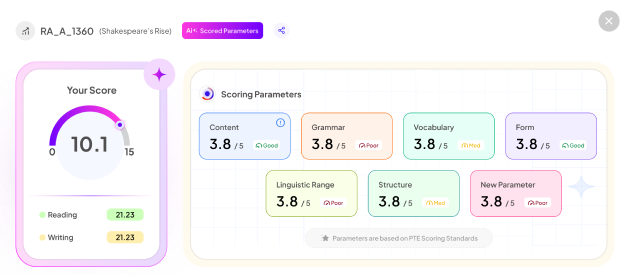
Start your free PTE mock test with Gurully and get AI-powered analysis for a personalized journey.

Do Universities and Immigration Authorities See All Your Scores?
This is one of the most misunderstood aspects of PTE. For universities and colleges:
- You have full control over which PTE score you send. Institutions and universities will see only the scores that you choose to share through your Pearson account.
For immigration authorities:
- In most of the universities, you only have to submit one valid PTE score or the required scores that you get. So no matter what your earlier scores were, the scores that you submit will be considered valid.
Should You Re-take PTE Immediately?
Attempting the PTE exam immediately is not considered a wise choice, but as students are in a rush, they commit this mistake. Without addressing the reasons for the low score, retaking the PTE exam will lead to the same result. Before re-booking, check by yourself:
- Where I am I lacking?
- Did I struggle with Speaking fluency, listening accuracy, or Reading speed?
- ·Was time management a problem?
A re-take is most effective when it follows targeted practice, not guesswork. Understand in which sections you are lacking and where you scored low. According to that, make a plan, prepare, and then re-attempt the exam.
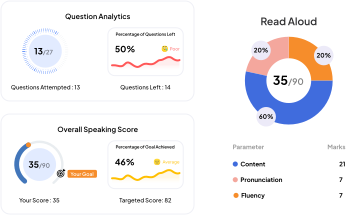
Get instant AI-powered analysis to track strengths, weaknesses & improve
- Personalized AI Insights – Understand your strengths & weaknesses instantly
- Smart Progress Tracking – Monitor improvement with in-depth analysis
- Boost Your Score Faster – Focus only where it matters most
Can You Re-take Only One Section of the PTE?
No, you cannot retake only one section in PTE. If you are scoring low even in one section and you are not meeting the targeted criteria, you have to re-attempt the entire exam.
Can You Create Multiple Pearson Accounts to Retake the PTE?
No. Pearson strictly prohibits candidates from creating multiple accounts to bypass the PTE retake policy or secure additional test bookings.
If you create another account to avoid retake restrictions or exceed the permitted number of attempts, it may be treated as a violation of Pearson’s testing policies. As a result, your test results could be delayed while your account is investigated.
If Pearson determines that you intentionally created multiple accounts to circumvent the rules, the consequences can be serious. These may include:
- Cancellation of your PTE test scores
- Suspension or permanent ban from taking future PTE exams
- Investigation under Pearson’s misconduct policy
- Reporting to relevant authorities or institutions where applicable
To avoid these issues, always use one Pearson account for all your PTE bookings and follow the official retake policy. If you’ve reached the maximum number of attempts or are facing an account-related issue, contact Pearson Support instead of creating a new account.
Does Re-taking the PTE Affect Your Previous Score?
No. Each PTE attempt is independent. Your previous score remains valid until it expires (PTE scores are valid for two years). A new test does not overwrite or cancel earlier results. You can decide later which score to use, depending on your application needs.
Common Reasons Students Re-take the PTE Based on real student experiences, the most common reasons include:
- Missing the required score by a small margin
- Low Speaking or Writing scores despite strong overall English
- Lack of familiarity with PTE task formats
- Poor microphone handling or test-day nerves
- Underestimating integrated tasks like Read Aloud or Summarize Spoken Text

How Can You Prepare for Your Next PTE Attempt Under the New Retake Policy?
The updated PTE retake policy encourages candidates to prepare more strategically before booking another test. Here are some practical tips to improve your chances of achieving your target score:
- Create a structured study plan: Since you can only have one active booking at a time and there is a limit on the number of attempts each year, focus on thorough preparation instead of taking the test repeatedly. Use official study materials, practice regularly, and dedicate extra time to your weaker sections.
- Review your score report carefully: Your PTE score report highlights your strengths and areas that need improvement. Use these insights to build a targeted study plan rather than practising every section equally.
- Book your test in advance: You can schedule your PTE test up to six months ahead. Booking early helps you secure a convenient test date, especially if you’re working toward university admission, visa, or immigration deadlines.
- Use only one Pearson account: Never create multiple accounts to bypass booking or retake restrictions. Doing so may delay your results, lead to score cancellation, or result in disciplinary action under Pearson’s misconduct policy.
- Request an exception if you’ve reached the annual attempt limit: If you’ve already taken the PTE 12 times within 12 months and need another attempt, you can submit an exception request to Pearson. Provide accurate information and any supporting documents so your application can be reviewed fairly.
What Should You Do on Exam Day for a Better PTE Retake Performance?
Your preparation doesn’t end with studying. Following a few simple exam-day strategies can help you stay focused, confident, and perform at your best.
- Get enough sleep: Aim for a good night’s sleep before your test. Being well-rested improves concentration, memory, and decision-making during the exam.
- Eat a healthy meal: Have a balanced breakfast with protein, whole grains, and healthy fats to maintain your energy throughout the test. Avoid heavy or sugary foods that may leave you feeling sluggish.
- Reach the test centre early: Plan your journey in advance and allow extra time for traffic or unexpected delays. Arriving early helps you settle in without unnecessary stress.
- Manage your time and stay calm: Use the waiting time before the exam to relax instead of cramming. Take a few deep breaths and focus on staying positive.
- Build confidence with positive thinking: Visualize yourself answering questions confidently and completing each section successfully. A calm and positive mindset can reduce exam anxiety and help you perform better.
Remember, your PTE retake is an opportunity to improve your score. Staying relaxed, prepared, and confident on exam day can make a significant difference in your overall performance.
A successful PTE retake comes from focused practice and fixing past mistakes, not repeating everything. PTE preparation on Gurully helps students improve faster through AI-scored mock tests, a real exam-like interface, and detailed feedback on key scoring areas. With the right insights and consistent practice, achieving a higher PTE score becomes practical and achievable.
FAQ
Can I retake the PTE if needed?
How many times can I take PTE
Is PTE valid for 3 years for PR?
What is the 3 second rule in PTE?
Is PTE rechecking worth it?
Also Read:
- Free PTE Resources – Prepare From Your Home and Score High in 2026
- How to Score 79 in PTE 2026 – Proven Study Plan & Tips
- Collocations for PTE 2026 – Learn And Score High in All The Sections